Quartz vs Sintered Stone vs Solid Surface: Choosing a Kitchen Countertop in Singapore
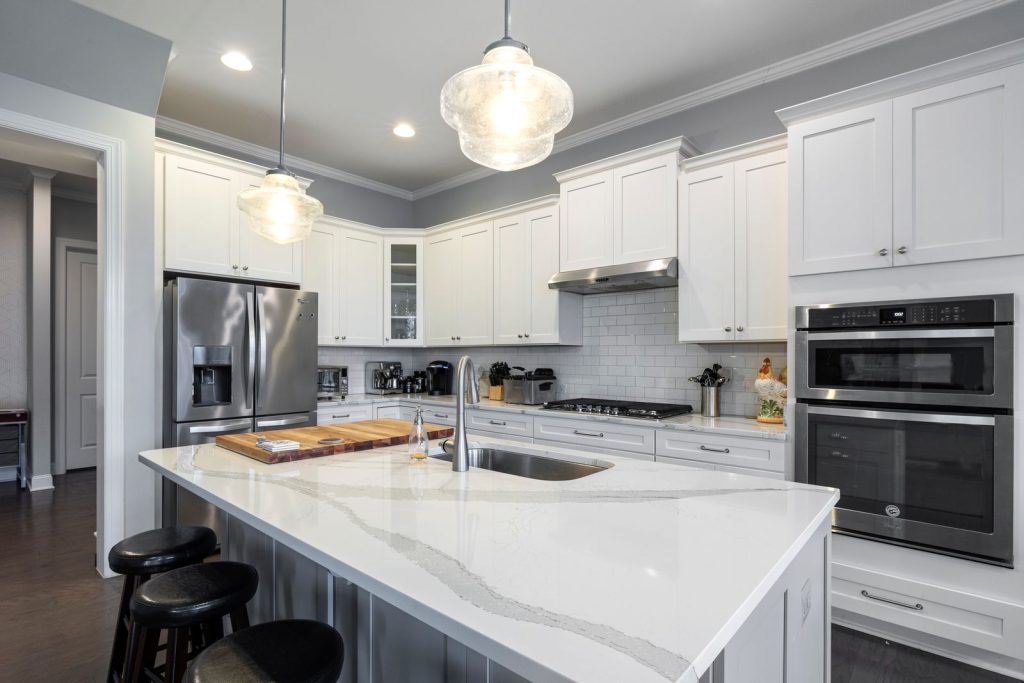
Walk into any kitchen showroom here and the salesperson will steer you toward sintered stone within about thirty seconds. It is the trendy answer right now, and often the right one. But not always. The best kitchen countertop for a Singapore home depends entirely on how you cook, what you cook on, and how much you actually want to spend before the carpentry quote even lands.
At Reno Bros we fit all three of these materials across BTOs, resale flats and condos every month, so the differences are not theoretical to us. Here is the honest breakdown, with real local pricing, so you can pick once and not regret it in two years.
Quartz: the safe, sensible workhorse
Quartz is engineered stone. Roughly 90% crushed natural quartz bound with polymer resin, pressed and cured into slabs. Brands you will hear quoted here include Caesarstone, Silestone and a long list of China-made equivalents that cost noticeably less.
It is non-porous, so it does not need sealing. It shrugs off knife marks, coffee, soy sauce and turmeric (the real test in a Singapore kitchen). For most families it is genuinely all the countertop they will ever need.
The one weakness is heat. That resin binder does not love it. Park a screaming-hot wok or a pot straight off the flame onto a quartz top repeatedly and you risk scorch marks or a dull patch where the resin blooms. Use a trivet and it is a non-issue. Forget, the way busy households do, and over a few years you will see it.
Budget roughly SGD 120 to 250 per foot run installed, depending on brand and thickness. For scale, a typical HDB kitchen run of 3 to 4 metres works out to roughly 10 to 13 foot run, so you can ballpark the slab cost straight off the per-foot figures. That mid-range pricing is exactly why quartz has been the default in HDB kitchens for the better part of a decade.
Sintered stone: built for wok hei abuse
Sintered stone (you will also hear it called porcelain slab) is made by firing natural minerals under extreme heat and pressure with no resin at all. That single fact is why it behaves so differently.
It handles sustained heat up to around 300°C, the highest of any common countertop material. You can rest a hot wok or a tray straight from the oven on it without a trivet. For households doing heavy daily zi char-style cooking on a high gas flame, this is the material that was built for you. It is also UV-stable, so it will not yellow in an open-concept kitchen flooded with afternoon sun. It is the favourite for waterfall island edges too, because porcelain slabs come in large formats and dramatic book-matched veining.
Two honest trade-offs. First, cost. Expect SGD 200 to 400+ per foot run, the most expensive of the three. Second, fabrication. Sintered slabs are hard and brittle at the edges, so they demand a skilled fabricator with the right tooling. A cheap installer cutting corners on a sintered top is asking for chipped edges around the sink and hob cutouts. This is one material where who installs it matters as much as the slab itself.
Solid surface: the budget all-rounder with one rule
Solid surface (Corian is the famous name, with Hanex, Staron and others alongside) is an acrylic resin and mineral blend. It is the most affordable of the three and has one genuinely lovely property the stones cannot match.
- Truly seamless joins. Sheets are bonded with colour-matched adhesive and sanded flush, so a long run or an integrated sink reads as one continuous piece. No grout lines, no visible seam to trap grime.
- Repairable. A scratch or even a small burn can usually be buffed out with a Scotch-Brite pad or a light sand. Try that on quartz or sintered and you cannot.
- Warm, soft feel and easy to fabricate into curves, upstands and moulded edges.
The catch is heat. Solid surface is the most heat-sensitive of the lot, soft enough to mark or discolour from a hot pan. It belongs in a dry kitchen, a bar counter, a vanity, or the home of someone who is disciplined with trivets. Put it next to a wok burner and you will be sanding it within the year. Pricing is the lowest here, which is why it still earns its place in tighter renovation budgets.
Which kitchen countertop suits your Singapore home?
Forget “best” in the abstract. Match the material to the job.
- Heavy wok cook, open flame, every night: sintered stone, no contest. Pay for it once.
- Typical family, mixed cooking, value-conscious: quartz. The sensible default, and you will not feel short-changed.
- Dry kitchen, island, or a bar/vanity run where seams would show: solid surface for that flawless joinless look.
- Common SG move: two materials. Quartz or sintered on the wet/cooking side that takes the heat, solid surface or a cheaper quartz on the dry kitchen island. Spend where the abuse happens.
One small thing we have learned on site. In a typical HDB kitchen run of about 3 to 4 metres, where you place the joins matters more to the final look than the brand name on the slab. A countertop with the seam tucked behind the hob, proper support under any overhang, and a sink cutout that lines up with the cabinet below will outshine a premium slab thrown onto badly planned carpentry. Countertop and carpentry have to be designed together, not ordered separately.
Before you sign off on a slab
Whichever way you lean, see the actual slab in person, not a 5cm sample chip. Veining and tone vary across a full sheet. Confirm the edge profile (a 20mm or 40mm mitred edge changes both the look and the price), ask who is fabricating it, and check that proper cabinet support is in before the stone goes on. If you would like a hand weighing it against your real cooking habits and budget, take a look at our past projects, see the full range of renovation services, or contact us. You can also message Reno Bros on WhatsApp and we will talk it through with your layout in front of us.
Kitchen countertop FAQ (Singapore)
How much does a quartz countertop cost in Singapore?
Budget around SGD 120 to 250 per foot run installed, with brand and thickness driving the spread. A typical 3 to 4 metre HDB kitchen run is roughly 10 to 13 foot run, so a standard quartz top usually lands somewhere in the low thousands once fabrication and cutouts are in.
Sintered stone vs quartz, which is better?
Neither wins outright. Sintered stone takes direct heat up to around 300°C and suits heavy wok cooking, while quartz is cheaper, easy to live with and fine for most families who use a trivet. Pick sintered for the flame, quartz for value.
Which countertop can take a hot wok straight off the flame?
Sintered stone is the safe answer. It is fired without resin, so a screaming-hot wok or an oven tray sits on it without scorching. Quartz can scorch over time and solid surface marks fast, so both want a trivet near the hob.