
Industrial and Modern Contemporary: A Singapore Renovation Style Guide
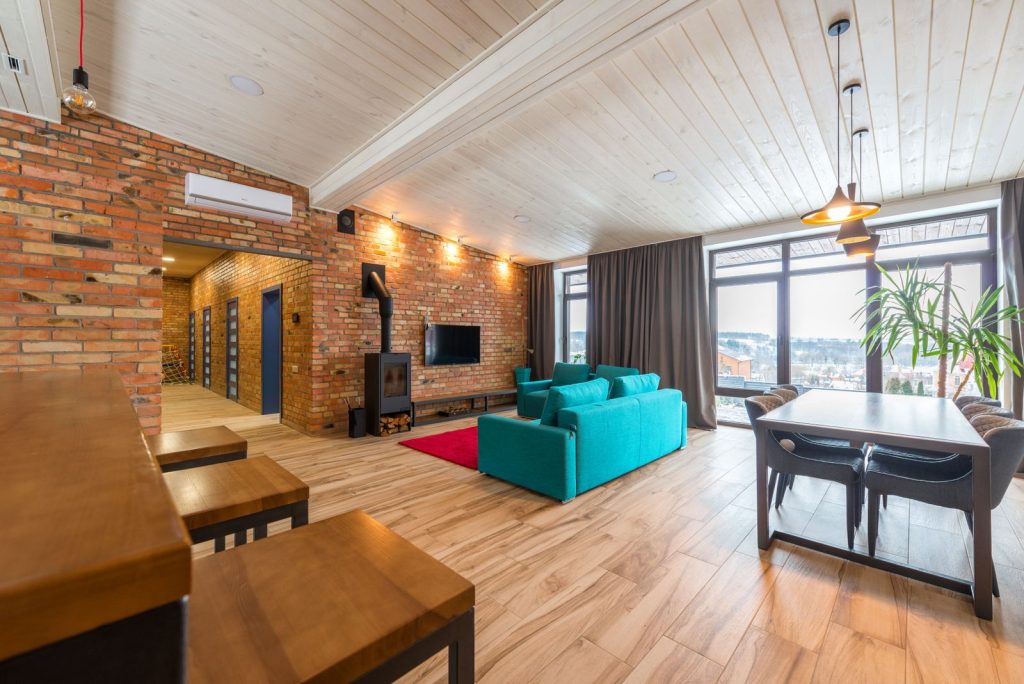
Most “industrial” HDB flats I walk into have the same problem. Someone painted the place grey, hung a few Edison bulbs, and by 4pm it feels like a basement. Dark, heavy, a bit gloomy. The intention was a Brooklyn loft. What landed was a room that fights our weather. The fix is almost never more money. It’s restraint, plus knowing what our light and humidity do to a space.
Done with a Singapore lens, what industrial interior design Singapore homeowners actually want is closer to a softened, contemporary version of the look. Exposed-concrete cues and black metal, yes, but warmed up so the flat doesn’t read like a car park. At Reno Bros we get asked for “industrial” and “modern contemporary” almost interchangeably, so here’s how we pull them apart, and how to execute either without it dating in three years.
What “industrial interior design” in Singapore really means (and why the raw version fights our climate)
Classic industrial borrows from old warehouses: exposed concrete, bare brick, visible ducting, black steel frames, Edison-bulb pendants on long flexes. It reads honest and a little rough. The trouble here is light and humidity. Our flats run deep and often face only one or two directions, so a fully grey, dark scheme eats whatever daylight you have. By late afternoon the room goes flat.
So the smart move is selective rawness. Pick one or two industrial gestures and let the rest of the home stay bright and breathable.
- A cement screed or microcement feature on the TV wall or a kitchen backsplash, not every surface. Microcement goes on as a thin 2-3mm coat over existing walls. Expect roughly S$16-25 psf done properly.
- Black metal as line work: slim window-grille profiles, a Crittall-style glass partition, hairline shelf brackets. Metal as accent, never as the dominant colour.
- One brick or concrete-look feature wall, balanced by warm timber-grain laminate elsewhere to stop it feeling cold.
- Edison or matte-black track lighting for character, paired with proper ambient and task lighting so you can actually see.
Cement screed flooring: the look everyone wants, with rules attached
Seamless concrete-look floors are the heart of the industrial look, and they suit our heat. Cool underfoot, no grout lines, easy to mop. Cement screed flooring runs around S$14-28 psf depending on area and finish. But there are HDB rules people forget until the contractor raises them.
HDB caps the total floor-finish thickness (screed plus your final surface) at 50mm measured from the bare slab, and that includes any existing finishes if you’re overlaying. Pre-packed screed is the required standard for dry areas now; site-mixed cement is out because the quality varies too much. Wet areas still need a waterproofing membrane, and once it cures you do a water ponding test of at least 24 hours (many contractors hold it 24-72h) before screed and tiles go on top. Skip that and an inter-floor leak becomes your problem, and your downstairs neighbour’s.
Two compliance basics people gloss over: any HDB job that involves hacking, wet works, floor screed or electrical changes needs an HDB renovation permit and must be carried out by an HDB-registered contractor on the Directory of Renovation Contractors. And the household shelter, the bomb shelter, is off-limits. You cannot hack it, and you cannot drill or fix anything into its walls, ceiling or door.
One honest caveat from doing these: real cement screed hairline-cracks. It’s part of the character, but not everyone is at peace with it. If you want the look without the hairlines and the curing wait, screed-look SPC vinyl or large-format porcelain in a concrete pattern gives you 90% of it with less drama and an easier overlay.
Why modern contemporary outlasts the trend cycle
Where industrial is about texture and edge, modern contemporary is about clean lines and a controlled palette. Picture a neutral base of warm greys, off-white or greige, with one confident accent colour and a deliberate mix of materials. Fluted panels, sintered stone, brushed brass or black hardware, woodgrain laminate from the likes of Lamitak or EDL. It’s the style most likely to still look good when you sell, because nothing is shouting.
The two styles overlap more than people think. A contemporary home with a single concrete-look wall and black-framed glazing reads “industrial” to most guests. That hybrid, clean bones with one or two raw touches, is what the majority of our condo and HDB clients are actually after, and it’s the most forgiving to live with day to day.
Which style suits a condo, and which suits an HDB
The architecture nudges you. Condos with taller floor-to-ceiling glazing, higher ceilings and balconies carry a fuller industrial scheme well, since there’s enough light and volume to absorb darker tones and exposed elements. You’ll just want to read your MCST fit-out rules first: many developments restrict hacking hours, require deposits, and have separate submissions for wet works and glazing.
HDB flats are a different animal. Ceilings sit around 2.6m, and a full false ceiling for cove lighting steals a little more, so a heavy all-grey industrial scheme can feel low and tight in a 90-110 sqm flat. For HDB I’d lean contemporary with industrial accents: a screed-look floor, one feature wall, black-framed glass between kitchen and living, and a bright timber-and-white backdrop. A full modern-industrial 4-room renovation typically lands in the S$50,000-75,000 range once you factor in screed work, feature surfaces and carpentry. It’s not a budget style, and worth planning properly.
Executing it so it doesn’t date
Trends curdle when they’re applied wholesale. The homes that still look sharp years later treated the look as a layer, not a theme. A few rules we hold to:
- Keep the shell neutral, theme the accents. Concrete-look floor and white-ish walls last; a fully black kitchen plus black floor plus black ceiling will feel heavy fast.
- Warm the light. 3000K for living and bedrooms keeps raw materials from looking cold; save cooler 4000K for the kitchen and study.
- Mix at least three textures. Concrete, timber and a soft textile stops the room reading like a showroom.
- Spend on the surfaces you touch. Get the screed, the metalwork and the carpentry right; the decorative Edison bulbs can be swapped cheaply later.
Get the proportions wrong and it reads basement. Spend the money on the screed and the metalwork, not the bulbs.
Talk it through before you commit to a look
The best version of either style starts with your flat’s light, layout and budget. If you’re weighing industrial against modern contemporary for a BTO, resale, condo or landed home, look through our past projects to see how we balance raw and warm, read up on our renovation services, or reach us through the contact page. Send me your floor plan and which way the windows face, and I’ll tell you straight whether a full industrial scheme will work or just darken the place. You can also message Reno Bros on WhatsApp.
Related Reading
- Beyond Minimalism: Why Quiet Luxury Is Taking Over Singapore Homes
- Condo Renovation Guide: Rules, Timelines and Design Wins
- The 2026 Guide to Renovation Costs and Budgeting
Related Resources
Read Next
Quartz vs Sintered Stone vs Solid Surface: Choosing a Kitchen Countertop in Singapore
Jun 15 Read Article →
BTO Renovation Timeline in Singapore: A Week-by-Week Reality Check
Jun 15 Read Article →