False Ceilings, Cove Lighting and L-Boxes: What They Cost and When They’re Worth It
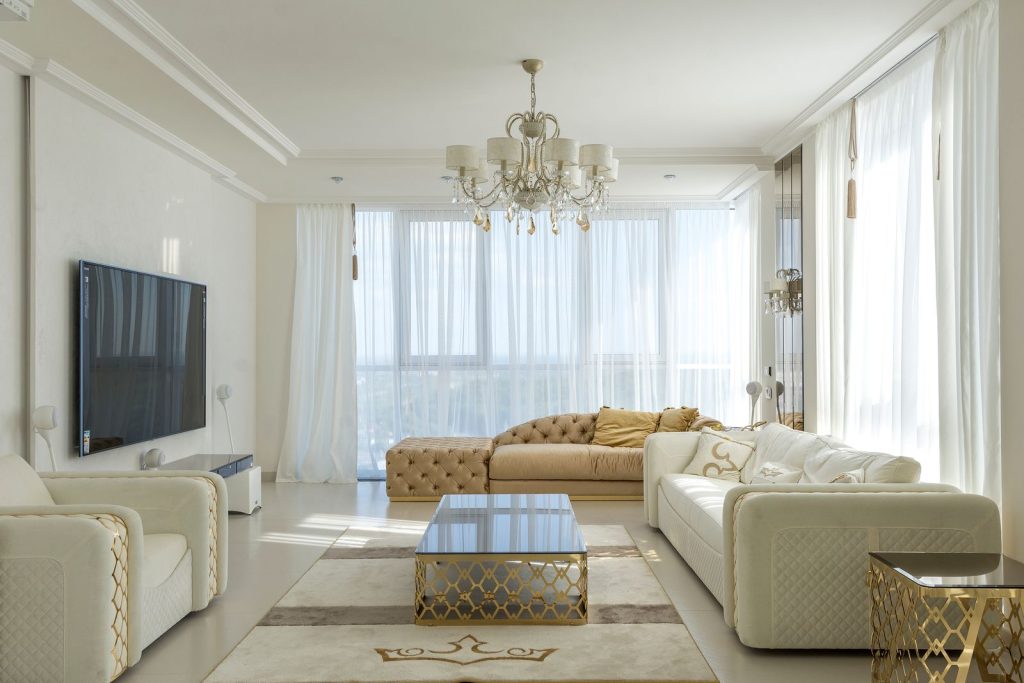
Stand in an empty BTO living room and look up. Grey concrete soffit, a fat aircon trunking line along one edge, maybe a beam near the balcony. That raw ceiling is where a lot of the “wow” in a finished home comes from, and a well-planned false ceiling in Singapore turns bare slab into something that looks designed.
The problem is that ceilings are easy to oversell. A salesperson shows you a glowing cove-lit feature, quotes a four-figure number, and you nod along without knowing what you’re paying for. At Reno Bros we’d rather you understand it first, because on a typical 2.6-metre HDB ceiling, every choice up there knocks on to the rest of the room.
What you’re actually paying for up there
A false ceiling is a secondary ceiling built below the original slab, framed in metal furring channels and skinned with plasterboard. It isn’t decoration for its own sake. It earns its keep by hiding the services every flat has: aircon piping and trunking, condensate drainage that needs a gentle gradient out, downlight wiring, and the odd beam. Gypsum is the default, though near a wet edge a moisture-tolerant board or PVC panel makes more sense.
One thing people forget: plan a removable access panel at the aircon fan coil unit. Your installer needs to reach the FCU for servicing and gas top-ups, and you don’t want to be cutting open a fresh ceiling later.
Full, partial or just an L-box: pick before you price
This decision drives most of the cost. Make it early.
- Full false ceiling. The entire room gets a new flat ceiling. Cleanest look, hides everything, but it drops the whole room’s height. On a 2.6m flat that can feel low once furniture is in.
- Partial / perimeter false ceiling. A band runs around the edges (where the trunking and beams live) while the centre stays at full slab height. The most popular choice in HDB flats, and usually the right one: you hide the services and gain a cove without making the room feel like a basement.
- L-box. An L-shaped boxed-out section, often along a wall or framing a TV feature. It conceals trunking and gives you a channel for cove lighting or recessed downlights, with minimal height loss.
- Bulkhead. The deepest drop, used to box in a beam or a kitchen hood duct.
Order matters because of the height maths. HDB requires about 2.4 metres of clear height in habitable rooms, and a full ceiling that buries everything eats into that. A partial design keeps the room breathing.
Cove lighting: the 100mm that makes or breaks it
Cove lighting is an LED strip hidden in a recessed lip in the false ceiling, throwing soft indirect light up and across. It’s the single biggest reason people build a perimeter ceiling at all, the warm glow that makes a living room feel calm in the evening instead of clinically lit.
A few honest pointers from doing these on site. The channel needs depth, roughly 100mm, or the strip’s diodes show as dots, not a smooth wash. Go warm, around 3000K; 4000K reads too cold. And cove alone won’t light a room for reading or cooking, so pair it with downlights or you end up squinting.
Plan all of this before the boards go up, because the housing and wiring get built into the framing. Retrofit a cove after the ceiling is closed and you’re re-opening it.
False ceiling Singapore costs: what you’ll pay
Ballpark figures for 2026, supply and install, varying with layout and how fiddly your trunking runs are:
- Standard plasterboard ceiling: roughly S$6 to S$9 per square foot.
- With L-box and cove lighting integrated: closer to S$8 to S$12 per square foot.
- L-box on its own: often per foot run, around S$4 to S$7 per linear foot for the boxing.
- Cove strip and pelmet work: typically a few hundred dollars on top, depending on run length and LED.
A whole-flat full false ceiling runs several thousand more. The cheapest quote isn’t always the win, by the way: thin framing and skipped corner taping is where you get hairline cracks a year later.
Skip the ceiling when it doesn’t earn its place
We’ll talk you out of one when it doesn’t earn its place. If a room has no trunking, no awkward beam and no lighting plan, a flat painted ceiling at full height often looks better and saves you money and headroom. Low-ceiling units are the clearest “skip it” case: losing 150mm in a room that already feels tight is a poor trade.
If budget is tight, put the money into a clean perimeter ceiling in the living room and leave bedrooms simple. That’s the call we’d make in our own flats.
FAQ
How much does a false ceiling cost in Singapore?
A standard plasterboard false ceiling runs about S$6 to S$9 per square foot, supply and install. Add an integrated L-box and cove lighting and you’re closer to S$8 to S$12 per square foot. A 4-room living and dining perimeter ceiling with cove usually totals S$1,500 to S$3,500.
How much ceiling height do you lose?
Expect to lose around 100mm to 150mm once you account for the framing, the board and the trunking it conceals. From a typical 2.6m HDB slab, that still clears HDB’s roughly 2.4m minimum for habitable rooms, but a full drop can feel low, which is why perimeter designs stay popular.
Is a false ceiling worth it for an HDB flat?
Usually yes, but rarely the full version. A partial perimeter ceiling hides the aircon trunking and gives you cove lighting while the centre keeps full slab height. If a room has no trunking, no beam and no lighting plan, a clean painted concrete ceiling often looks better and costs nothing extra.
What is an L-box versus a cove?
An L-box is the L-shaped boxed-out structure that hides trunking along a wall or frames a feature, built from the same framing and board. A cove is the recessed lip within that boxing where the LED strip sits. Put simply, the L-box is the housing and the cove is the lighting detail it carries.
One last thing before you sign the quote
Ask exactly where the access panel sits and how the contractor will tape the corners. Those two lines tell you more about the finish than the price does. For a ceiling built around your flat’s height and aircon layout, see Reno Bros’ past projects and renovation services, or get in contact. You can also message Reno Bros on WhatsApp for a straight answer on whether yours is worth the height it costs.
Related Reads
- The 2026 guide to renovation costs: budgeting for interior design in Singapore
- Condo renovation guide: rules, timelines and design wins
- Ideas for 4-room HDB flats that feel bigger