Peranakan-Modern Interiors: Bringing Heritage Into a Contemporary Singapore Home
Walk into a Joo Chiat shophouse and the first thing that hits you is the floor. Those small, jewel-toned cement tiles in a repeating motif, the dark timber, the carved fretwork above the doorway. Beautiful. But most people don’t live in a conserved shophouse. They live in a four-room flat in Punggol or a condo in the East, and the question that lands on our desk at Reno Bros is always the same: how do you bring that heritage feeling home without it reading like a theme restaurant?
That tension is the whole game with Peranakan interior design in Singapore. Done well, it’s warm, personal, rooted in place. Done badly, it’s a costume. The difference isn’t budget. It’s restraint, and knowing exactly where the heritage goes and where it stays out of the way.
Peranakan Interior Design in Singapore: Why the Full-On Look Dates Fast
Here’s the honest part. The maximalist Peranakan interior, every wall papered in motif, ornate furniture in every corner, ten different tile patterns, is gorgeous in a museum and exhausting in a home you actually clean on Sunday. It also dates, the way anything that leans hard into one era always does.
The version that lasts treats Peranakan as a layer, not a theme. You keep the soul, the colour, the craft, and you let modern Singapore do the heavy lifting everywhere else: clean lines, generous white, good light. In a 90 sqm flat with one or two windows facing the corridor, that calm backdrop does real work. It stops the place feeling smaller than it already is.
Pick one hero, not five
The most common mistake we see is people doing everything at once. Tiles on the floor, tiles on the backsplash, fretwork on the partition, jewel tones on three walls. It fights itself. Choose one hero element and build the room around it. The usual candidates:
- An encaustic tile feature at the entryway, kitchen backsplash or powder room floor. Authentic cement Peranakan tiles run roughly SGD 10 to 60 a piece depending on whether they’re new replicas or vintage, and they’re usually small format (around 20 by 20 cm), so even a modest patch reads rich.
- A single accent wall in a proper Peranakan colour. Think turquoise, emerald, mustard, or that signature salmon pink. One wall in Nippon or Dulux, not the whole room.
- A fretwork or timber screen to divide spaces or hide an aircon ledge. Carpentry-led, and it doubles as function.
- Rattan and cane in furniture or cabinet inserts, which nods to the heritage without a single tile in sight.
One hero, everything else in support. That’s the rule that keeps the look current.
Making it survive a tropical flat
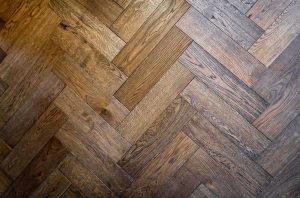
Heritage materials and Singapore humidity have a complicated relationship, and this is where a lot of Pinterest-inspired jobs come unstuck. Real Peranakan interiors leaned on solid dark timber. In an air-conditioned flat that swings between 24 degrees and a switched-off 32, solid wood moves, joints gap, and veneer can lift. For most of the dark-wood feeling we now spec woodgrain laminate from ranges like Lamitak or EDL, which gives you the rich, deep grain without the warping. Save real wood veneer for a feature panel that isn’t taking daily abuse.
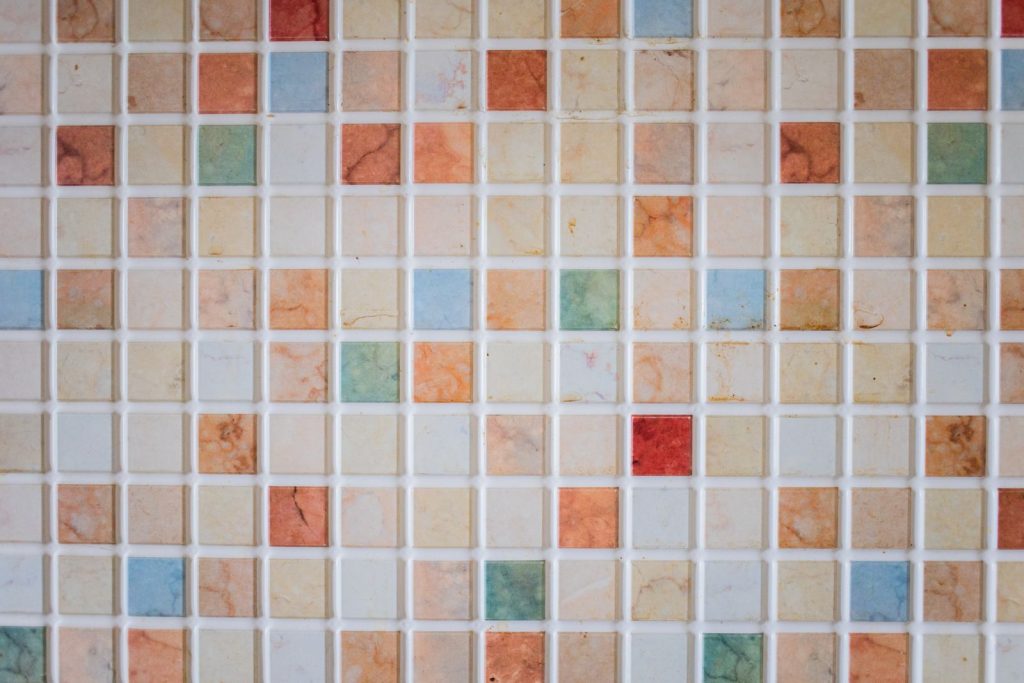
Tiles are the other watch-point. Genuine cement encaustic tiles are pigment-pressed and cured, not fired, so they’re porous and need sealing, and they’re best kept to walls, splashbacks and low-traffic floors rather than a wet shower base. For larger heritage-pattern floors, porcelain tiles printed with Peranakan motifs are a sensible swap, cooler underfoot and far easier to live with. And over any wet area, the waterproofing membrane and the 24 to 48 hour ponding test still apply, motif or no motif. Heritage charm doesn’t exempt you from a leak to the unit below.
The rules change if you’re in an actual shophouse
If you’re lucky enough to own a conserved shophouse rather than evoking one in a flat, the brief flips entirely. You’re not adding heritage. You’re protecting it. In a URA-gazetted conservation area, the facade, roofline, timber shutters, plasterwork and original ceramic tiles are protected, and URA expects them retained or restored like-for-like under its 3R principles of maximum retention, sensitive restoration and careful repair. You’ll need URA Conservation Permission before works begin, and anything structural pulls in BCA approval with a Qualified Person on board. This is a different universe from an HDB job, and restoring original tiles is specialist, slow work. Don’t let a general contractor improvise it.
For most homeowners doing this in an HDB flat, the usual rules govern: a licensed contractor from HDB’s Directory of Renovation Contractors, the renovation permit before any hacking, and a firm cap on when the noisy work happens. Noisy works like hacking, wall demolition and tile-cutting are confined to 9am to 5pm on weekdays only, not Saturdays, Sundays, public holidays, or the eves of major public holidays. General non-noisy renovation can run 9am to 6pm Monday to Saturday. So however excited you are about that backsplash, the hacking happens on a weekday.
A budget that buys character, not clutter
You don’t need a heritage-property budget for this. The spend is about placement, not volume.
- A statement encaustic tile backsplash or entryway patch: roughly SGD 1,500 to 4,000 supplied and laid, depending on tile choice and area.
- A custom fretwork or fluted timber screen: fluted panelling runs around SGD 15 to 35 per square foot for laminate-finish MDF installed, more for solid timber and intricate fretwork.
- An accent wall in a heritage colour: largely paint and labour, a few hundred dollars.
One observation from doing these: the tile choice makes or breaks it. We always lay out a dry sample run on site before grouting, because a motif that looks perfect on a 6-piece swatch can turn busy across a whole wall. Twenty minutes of shuffling tiles on the floor has saved more than one client from a backsplash they’d have come to hate.
FAQ: Peranakan Interior Design in Singapore
How much do Peranakan tiles cost?
Authentic cement Peranakan tiles run roughly SGD 10 to 60 a piece, depending on whether they are new replicas or vintage originals. They are usually small format, around 20 by 20 cm, so even a modest entryway or backsplash patch reads rich without a big spend.
Do I need URA permission for a Peranakan-style renovation?
Only if you are working on a conserved shophouse. In a URA-gazetted area you need URA Conservation Permission before works begin, with anything structural pulling in BCA approval. A standard HDB flat evoking the look needs no special heritage permission, just the usual renovation permit.
Can I use Peranakan tiles in a wet area?
Genuine cement encaustic tiles are pigment-pressed and cured, not fired, so they are porous and need sealing. Keep them to walls, splashbacks and low-traffic floors. For wet areas and busy floors, use porcelain tiles printed with Peranakan motifs instead, which are denser and easier to live with.
Real wood or laminate for the heritage timber look?
For most of the dark-timber feeling, we now spec woodgrain laminate from ranges like Lamitak or EDL. It holds up to our humidity far better than solid wood, which moves and gaps in air-conditioned flats. Save real wood veneer for a feature panel that is not taking daily abuse.
Where to take it from here
A Peranakan-modern home works when the heritage is a deliberate accent and the rest of the space stays quiet enough to let it sing. To see how we’ve handled heritage and feature work across real homes, look through our past projects, browse our renovation services, or get in touch through contact. You can also message Reno Bros on WhatsApp and tell us which heritage element you’re drawn to. We’ll tell you, honestly, whether it belongs on the wall or the floor.
Related Reads
- Beyond Minimalism: Why Quiet Luxury Is Taking Over Singapore Homes
- A Carpentry Guide: Custom Storage That Works Harder
- Top 2026 Trends Redefining Interior Design in Singapore