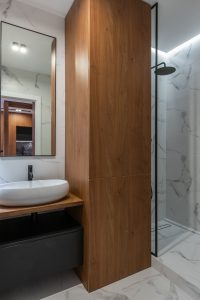
Laminate vs Veneer for Carpentry: Where Each One Belongs in Your Home
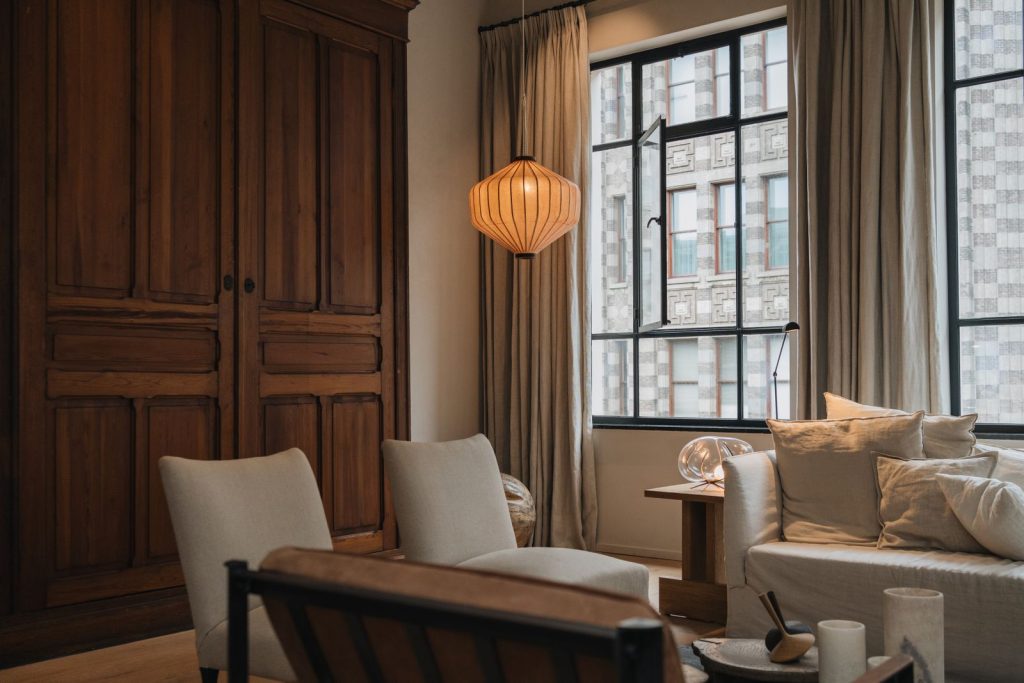
Stand in any laminate showroom in Singapore for ten minutes and you’ll see the same thing happen. A couple flips through a few hundred swatches, falls hard for a warm oak woodgrain, then the designer quietly asks the question that decides the whole budget: laminate or real veneer? People treat laminate vs veneer like a fixed ranking, one better than the other. And the honest answer is that it depends entirely on which door you’re putting it on.
We’ve fabricated enough kitchens, wardrobes and TV consoles at Reno Bros to have strong opinions here. Both finishes have a job. Put them in the wrong spot and you either overpay for fragility, or save money on something that looks flat the moment light hits it. So here’s how the two actually behave in a tropical flat.
What you’re actually comparing
Quick definitions, because the words get thrown around loosely. Laminate is layers of printed paper and resin pressed under heat into a hard, sealed sheet, then glued onto your carpentry. Veneer is a thin slice of genuine timber, paper-thin, bonded to the same substrate and then sealed with lacquer or oil.
That one difference (print versus real wood) drives everything else: durability, price, how it ages, and how much fuss it needs in our humidity. Neither is the carcass, by the way. Both sit on plywood or MDF, and what’s underneath matters more than most homeowners realise. More on that below.
Laminate: the workhorse that earns its keep
For most of a home, laminate is simply the right call, and it isn’t a compromise. Modern laminate is genuinely good. Brands like Lamitak and EDL now do embossed-in-register textures, where the physical grain you feel lines up with the printed grain you see. Run your hand across a good fluted or wood-grain Lamitak panel and you have to look twice.
What it does well in a Singapore flat:
- Shrugs off scratches, knocks, water splashes and heat far better than veneer
- Wipes clean with a damp cloth, no polishing, no resealing, ever
- Comes in a huge range, from matte solid colours to woodgrain, stone, metallic and fluted
- Stays stable in our humidity, which is the whole ball game here
- Costs a fraction of veneer, so your budget stretches across the full home
On price, carpentry in laminate typically runs around SGD 180 to 250 per foot run for good plywood with a standard finish, and the sheets themselves sit roughly between SGD 40 and 160 per 4×8 panel depending on the series. The trade-off is honest. Laminate is a print, so under a slanting evening light a large flat panel can read a touch uniform, and the edges show a faint dark line unless your contractor specifies matching ABS edging.
Where veneer is worth the money (and where it isn’t)
Veneer is where a flat stops looking specified and starts looking made by hand. Because it’s actual timber, no two panels are identical, the grain has real depth, and it warms up under light in a way print can’t fake. On the right surface, it’s worth every dollar.
But be clear-eyed about the cost and the care. Veneer and other premium door finishes generally add 50 to 100 percent over standard laminate, so a feature wall that would’ve been a few hundred in laminate can run into four figures in veneer. It scratches more easily, it’s sensitive to standing water, and it needs occasional resealing or polishing to hold its colour. Park a veneer cabinet next to a window with harsh afternoon sun and unsealed timber will lift and fade within a few years.
So don’t avoid veneer. Just put it somewhere it gets admired instead of abused.
The mix strategy we actually use
Here’s the move that gives you a premium home without a premium-everywhere bill: laminate for the high-use, water-prone, hard-working surfaces, and veneer for one or two feature pieces where the eye lands.
In practice that looks like:
- Kitchen cabinets and wardrobes in laminate, since these take daily abuse, splashes and humidity
- Bathroom and service-yard carpentry in laminate, never veneer, no exceptions
- A TV feature wall, headboard panel or display console in veneer, where it’s seen and rarely wet
- Tall entryway or dining feature in veneer if you want one quiet statement
One small thing we’ve learnt on site: when you run a veneer feature panel next to laminate cabinetry, get your designer to match the tones deliberately rather than hope they blend. Real timber has a slightly different sheen and undertone to a printed grain, and the join between the two is exactly where an untrained eye spots the difference. Matched well, nobody can tell where the budget went.
The part nobody photographs: the carcass
This is the bit that decides whether your carpentry survives ten Singapore monsoons. Laminate and veneer are just skins. What they’re glued to is the carcass, and our climate is unforgiving on it.
For dry-zone carpentry, standard plywood is fine. For anything near water (under-sink cabinets, kitchen base units, bathroom vanities, the service yard) insist on moisture-resistant or marine-grade plywood, not MDF. MDF drinks moisture, swells and crumbles at the base once a slow leak or constant humidity gets in, and you won’t see it until a door stops closing. Plywood’s cross-layered build holds up far better. The skin gets the compliments; the carcass is what you’re really paying a good contractor to get right.
The kitchen island that trips people up
The one spot homeowners overthink is a kitchen island that faces the living room. It reads as a feature piece, so the instinct is to dress it in veneer to match the TV wall behind it. Don’t. That island still cops oil splatter, water, and bags dumped on the edge while someone fishes out groceries. It’s a working surface wearing a party outfit. Keep it in laminate, just your nicest series, maybe a deep fluted or a matte stone-look that holds its own against the veneer across the room. You get the statement without babysitting it for a decade.
It’s the same test for the whole flat. Walk it room by room and ask one plain question at each piece: does this get touched, splashed, or shoved against daily? If yes, laminate, and pick a good one. If it just sits there being looked at and stays dry, that’s your veneer.
Plan your carpentry with people who fabricate it daily
Good carpentry is half material, half judgement about where each material belongs, and that judgement only comes from doing this on real sites. You can see how we balance laminate and veneer across kitchens, wardrobes and feature walls in our past projects, read through what’s covered under our renovation services, or contact us to talk through your own home. The quickest way to start is to message Reno Bros on WhatsApp and tell us what you’re planning.
Related Reads
- Carpentry guide: custom storage that works harder
- Kitchen design guide for HDB and condo homes
- The 2026 guide to renovation costs and budgeting