Clever Carpentry: How to Squeeze Real Storage Out of a Small HDB Flat
Most small HDB flats don’t have a storage problem. They have a planning problem. The cupboards came too shallow, the dead corners got wasted, and six months in, the shoe rack is overflowing onto the corridor again.
Good HDB storage ideas aren’t about buying more units from the furniture mall. They’re about reading your floor plan honestly and getting carpentry built to the millimetre, into the gaps a freestanding piece will never fill. We’ve done this on enough 3-room and 4-room flats at Reno Bros to know the same handful of moves solve most of it. Here are the ones worth your money.
Full-height carpentry is the highest-impact HDB storage idea
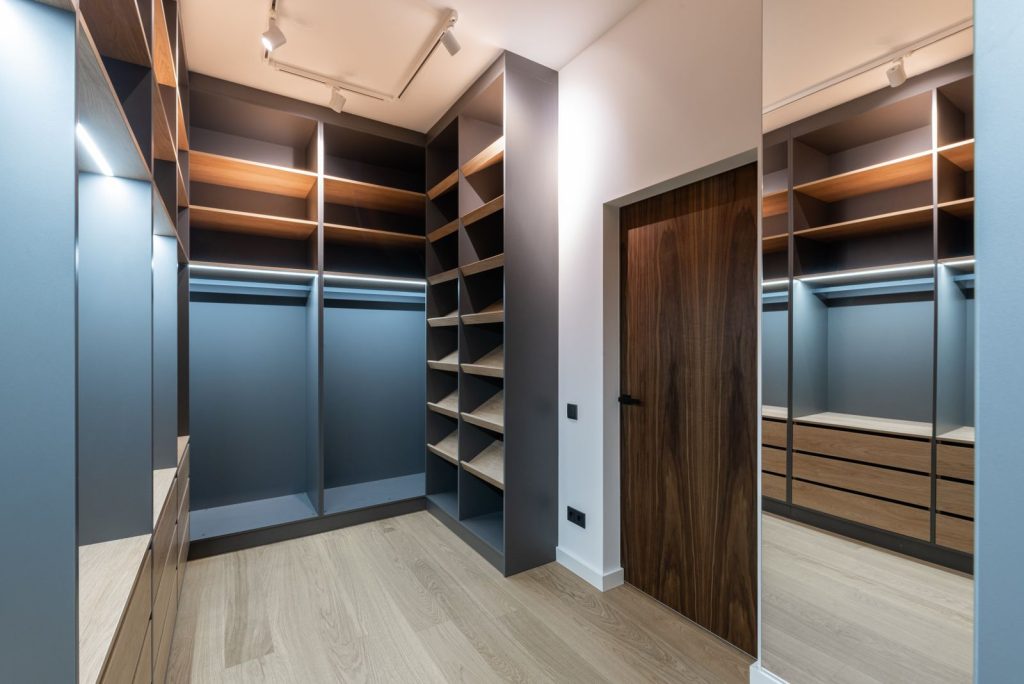
The single biggest waste in a small flat is the gap above your wardrobe. That 400mm to 600mm of air between the top of a store-bought cabinet and the ceiling? That’s a whole extra shelf of luggage and seasonal bedding, gone.
HDB ceilings sit around 2.6m, so a full-height run gives you serious vertical storage. The top tier is awkward to reach, so put the things you touch twice a year up there: festive decorations, the spare duvet, the suitcase you only drag out for Bangkok trips.
Custom wardrobes here typically run from around SGD 240 to SGD 380 per foot run depending on door type and finish. Swing doors sit at the lower end; sliding and aluminium-framed sliders cost more. A laminate carcass in moisture-resistant plywood holds up far better in our humidity than cheap chipboard, which swells the moment a damp towel leans on it.
A quick note on laminate
For high-traffic carpentry, laminate is the practical pick. Brands like Lamitak and EDL give you woodgrain, fluted and matte stone looks that wear well and wipe clean. Save real veneer for a feature panel, not your everyday wardrobe doors.
Your bed is sitting on 1.5m of wasted floor
Start with the price, because it surprises people. A custom carpenter-built platform bed often lands in the SGD 2,500 to SGD 5,000 range depending on size, drawer count and finish, more than a ready-made storage bed. What you buy for that is a raised base built to your exact room width, with no wasted gap at the sides, that swallows an astonishing amount: linens, off-season clothes, the kids’ overflow toys.
A frame on legs just collects dust bunnies. A platform turns that same footprint into the most under-rated storage in a small bedroom. Three things decide how well it works:
- Side drawers are easiest to access daily, but need clearance to pull out fully.
- Top-hung (lift-up) storage uses the whole footprint, ideal when one side is against a wall.
- Gas struts on the lift-up base are worth paying for. Cheap hinges sag within a year.
One thing we’ll always flag: ventilation. In our climate, a fully sealed base with damp items inside is asking for mildew. Leave breathing gaps and air the compartments now and then.
Steal the entryway and the hallway
The strip by your front door is prime real estate that most people waste on a flimsy shoe rack. A built-in shoe cabinet that runs full-height gives you a landing zone for shoes, umbrellas, keys, parcels and the disinfectant nobody wants on display. Leave an open niche at counter height for keys and your access card, add a single drawer for masks and small bits, and the entry stops being a clutter magnet overnight.
Hallways are the other forgotten zone. A slim cabinet just 250mm to 300mm deep along a corridor wall barely eats into walking space but holds a surprising amount of household stock, cleaning supplies and stationery. A 600mm-deep cabinet in a 1m corridor blocks the path. Go shallow and long instead.
Don’t fight the household shelter, hide it
Every HDB flat built from the late 1990s onward has a household shelter, the so-called bomb shelter. It’s structural, and the rules are strict. The mistake we see most is a contractor who just boxes it in and breaks them. SCDF guidance limits how deep you can drill into the shelter walls (commonly cited as no deeper than 50mm), and you must not remove, relocate, modify, or tamper with the ventilation sleeve, its plate, or the bolts and gaskets securing it. We always check the current SCDF Household Shelter guide before fixing anything to those walls.
The gas-tight door is the part people get wrong in both directions. It cannot be removed, modified, or obstructed, and it has to stay fully operable and accessible. But you are allowed to conceal it: a removable lightweight facade, wallpaper, or a magnetic panel that lifts away is fine, as long as the original door underneath is untouched and still works. So the smart move is a concealment panel flush with the surrounding carpentry, letting the door read as part of a wardrobe or feature wall. Inside, keep it to light removable timber or wire shelving that needs no deep fixings, and you’ve got a tidy pantry or store.
Benches, bay seats and settees that store
Any seat in a small flat should earn its keep twice. A window bay seat with a hinged top becomes a reading nook plus a chest for bulky items. A dining bench against the wall stores table linen and board games under the cushion. A built-in settee base can hold spare bedding for guests.
This is also where you reclaim the kitchen. Top-hung cabinets that go right up to the ceiling add a full extra row for appliances you use occasionally, the air fryer’s second basket, the steamboat pot. We reserve the highest shelf for the lightest items so nobody’s wrestling a cast-iron pot down from above their head.
Bespoke versus ready-made: where to spend
You don’t need everything custom. The honest split we recommend:
- Go bespoke for anything fitted to an awkward dimension: full-height wardrobes, the entry cabinet, platform beds, the household-shelter conceal, hallway slimlines.
- Buy ready-made for freestanding pieces that may move with you: a sideboard, open shelving, a console.
One reality worth knowing if you’re renovating an occupied block: HDB only allows noisy works like drilling, hacking and tile-cutting on weekday daytimes, generally Monday to Friday from around 9am to 5pm, with none on Saturdays, Sundays or public holidays. There’s also a cap of no more than three consecutive days of demolition and hacking. Permitted hours are reviewed from time to time, so check the current HDB renovation guidelines. Most carpentry is fabricated offsite and installed quietly, but any wall-fixing still has to respect those hours, and a contractor who plans around them keeps you on good terms with the neighbours.
Frequently Asked Questions
How much does a custom full-height HDB wardrobe cost?
Custom wardrobes here typically run from around SGD 240 to SGD 380 per foot run, depending on door type and finish. Swing doors sit at the lower end, while sliding and aluminium-framed sliders cost more. Running it full-height to the ceiling adds the most usable storage for the money.
Can I build storage into an HDB household (bomb) shelter?
Yes, carefully. SCDF guidance limits drilling depth into shelter walls (commonly cited as no deeper than 50mm) and bars tampering with the ventilation sleeve. The gas-tight door cannot be removed or modified but may be concealed with a removable panel. Stick to light, removable shelving and check the current SCDF guide first.
What carpentry counts as noisy works under HDB rules?
Drilling into walls, hacking, demolition and tile-cutting all count as noisy works. HDB permits these only on weekdays, generally Monday to Friday around 9am to 5pm, and never on Saturdays, Sundays or public holidays. Offsite-fabricated carpentry installs quietly, but any wall-fixing must still fall inside those hours.
Where to take this next
Send us your floor plan on WhatsApp and we’ll mark up where the carpentry actually pays for itself, then see how it comes together across our past projects. Quickest of all, message Reno Bros on WhatsApp with your layout.
Related Reads
- Carpentry guide: custom storage that works harder
- Ideas for 4-room HDB flats that feel bigger
- Maximising HDB BTO space: clever hacks
Related Resources
{“@context”:”https://schema.org”,”@type”:”FAQPage”,”mainEntity”:[{“@type”:”Question”,”name”:”How much does a custom full-height HDB wardrobe cost?”,”acceptedAnswer”:{“@type”:”Answer”,”text”:”Custom wardrobes in Singapore typically run from around SGD 240 to SGD 380 per foot run, depending on door type and finish. Swing doors sit at the lower end, while sliding and aluminium-framed sliders cost more. Running it full-height to the ceiling adds the most usable storage for the money.”}},{“@type”:”Question”,”name”:”Can I build storage into an HDB household (bomb) shelter?”,”acceptedAnswer”:{“@type”:”Answer”,”text”:”Yes, carefully. SCDF guidance limits drilling depth into shelter walls (commonly cited as no deeper than 50mm) and bars tampering with the ventilation sleeve. The gas-tight door cannot be removed or modified but may be concealed with a removable panel. Stick to light, removable shelving and check the current SCDF guide first.”}},{“@type”:”Question”,”name”:”What carpentry counts as noisy works under HDB rules?”,”acceptedAnswer”:{“@type”:”Answer”,”text”:”Drilling into walls, hacking, demolition and tile-cutting all count as noisy works. HDB permits these only on weekdays, generally Monday to Friday around 9am to 5pm, and never on Saturdays, Sundays or public holidays. Offsite-fabricated carpentry installs quietly, but any wall-fixing must still fall inside those hours.”}}]}